
Fable Engineering #3 - From Many Ideas to One Clear Vision
What 300 Parents Taught Us About Building a Robot People Actually Use.

Hey friends,
Over the past few months, we’ve been deep in the messy, exciting process of figuring out what Zero — our home robot — should really be. We didn’t want to rush to build “just another” gadget. Instead, we’ve explored, listened, and learned before committing to the path ahead.
Exploring Every Possibility
When we started, we cast a wide net for possible applications: child education, eldercare, home monitoring, companionship, and more. We wanted to see where robotics could have the biggest impact inside the home — not just technically, but emotionally.
We:
Spoke with 50+ home robot owners about what they love, what frustrates them, and why some robots end up in the closet.
Surveyed 300 US parents with kids aged 3–10 about their needs, hopes, and worries.
Tested multiple early prototypes with real families to see how people actually interact with a robot in their living space.
What the Data Told Us
The conversations and survey results made one thing clear: cuteness isn’t enough. Single-purpose robots might be fun for a week, but they rarely become part of daily life.
Here’s what we learned from parents in our survey:
90% wish for meaningful engagement for their kids while they handle other responsibilities.
→ There’s a massive desire for a “second pair of hands” that can entertain, teach, and supervise — a perfect match for Zero’s vision-language-driven interaction.77% are highly interested in educational games & STEM learning from a robot (4–5/5 rating).
→ Validates that learning + play is the killer app for a physically intelligent, mobile robot.50% prefer a mobile robot that can move around the home over a stationary voice assistant.
→ Confirms that physical presence is a true differentiator — mobility isn’t just a nice-to-have, it’s a buying preference.
The Insight That Changed Our Direction
Initially, we thought finding the “killer app” for home robotics would be about choosing one specific use case and nailing it. But the more we spoke to people, the more we realized something bigger:
The real killer app is imagination.
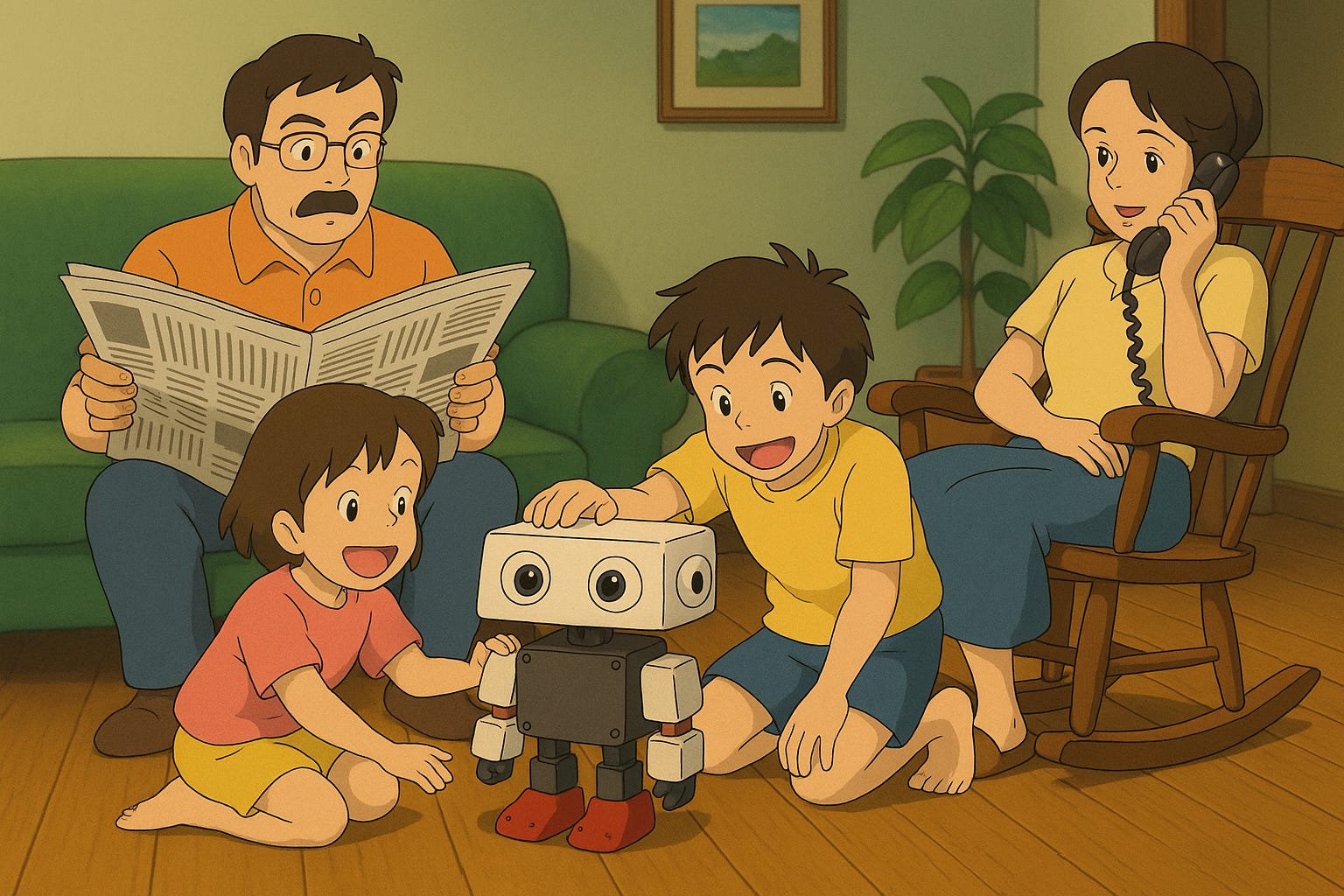
Everyone had their own idea of what they’d want a home robot to do. Some wanted it to help with homework, others to keep their elderly parent company, and others just wanted it to play games with their kids. No single function could satisfy everyone — but a versatile platform could.

Where We’re Going Next
That’s why Zero is evolving into what we call the “Platform for physical intelligence” — a platform for playful and practical robotics in the home.
Out of the box, Zero will:
See, understand, and navigate the home using state-of-the-art AI.
Engage with people in natural, expressive ways.
Adapt to different needs through a library of apps and user-created programs — from STEM learning games to light household assistance.
The core capabilities that make this possible:
Autonomous Navigation — SLAM-based mapping, obstacle avoidance, and the ability to move where it’s needed.
Vision & Speech — Object and person recognition, natural conversation, and real-time understanding.
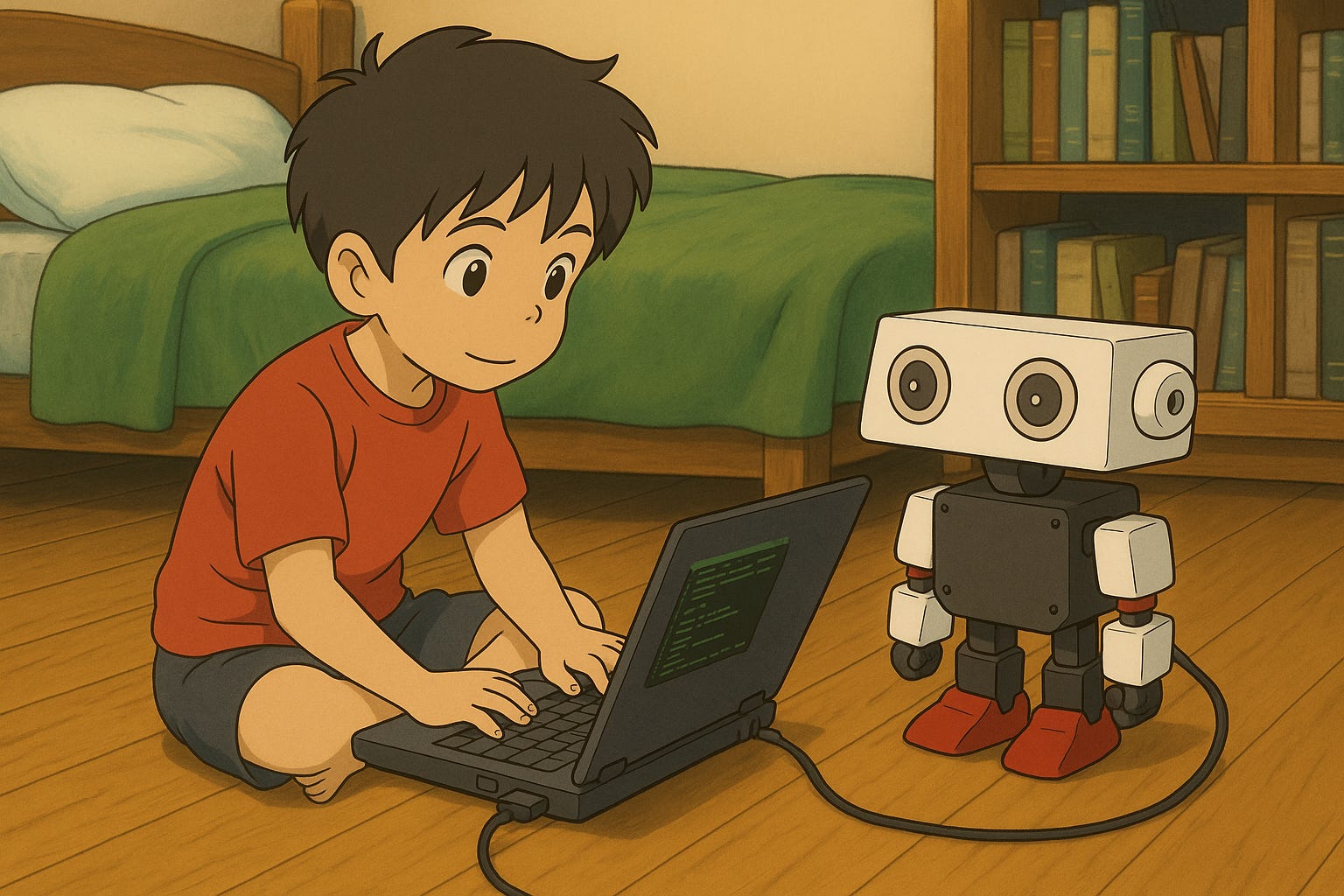
App-like Programmability — From block-based coding for kids to full Python/ROS2 for advanced developers.
Peripheral Hacking Support — Expand with GPIO, USB, and wireless connections for new devices and functions.
We believe this approach gives Zero the flexibility to stay relevant, useful, and loved for years — because it won’t just do one thing. It will do your thing.
A platform for personal physical intelligence.
With 250k+ social media reactions, 150+ early adopter families already on our list, and a community hungry to create, we’re ready to build the future of physical intelligence — together.
Until then,
Kush & Pierre-Louis
Co-Founders, Fable Engineering